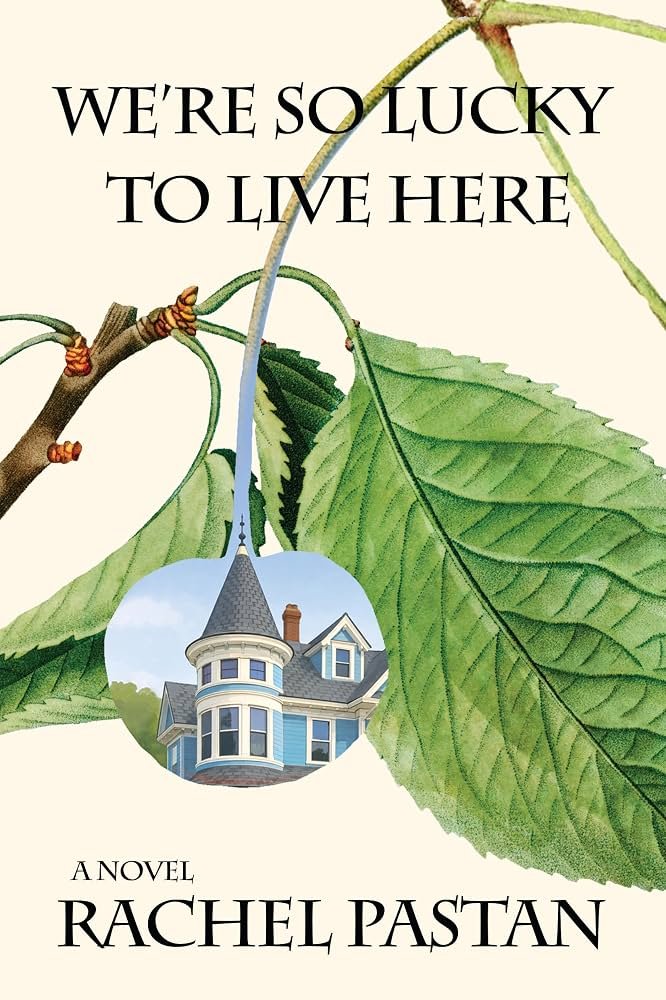
From the award-winning author of In the Field, an inquiry into grief, love, housing affordability, and the transformative power of art, in the story of a young theater director who, after her mother’s death, stages Chekhov’s The Cherry Orchard in her childhood home.
Gwen Rivlin moves back home to Philadelphia in the wake of her mother’s death, and into the big, shabby house with a turret where they both grew up. Her friends tell her it’s too expensive for a 27-year-old theater director, and too suburban if she has any hopes of keeping her social life alive.
Gwen is determined to stay, even when her schemes to make the house more affordable run afoul of the single-family zoning laws and earn the disapproval of her neighbors. To smooth things over, and to assuage her own grief, Gwen stages a production of The Cherry Orchard inside the turret house. She casts friends, coworkers from the local coffee shop, and various community members in Anton Chekhov’s play about a family struggling to hold onto its own real estate.
Through the creation of this beautiful and transitory work of art, Gwen heals old breaches, reevaluates her relationship with her difficult mother, and weaves a new, non-traditional family for herself.
Praise for We’re So Lucky to Live Here
“A grieving theater director tries to keep her childhood home in this moving novel from Pastan (In the Field). Gwen Rivlin, 27, grew up sharing a love of literature with her mother, Bobbie, an English teacher, but the pair often butted heads, and Bobbie disapproved of Gwen’s “raucous and messy” stage productions in Pittsburgh, “prefer[ring] her drama understated with shimmering, half-glimpsed depths.” After Bobbie dies from a fall down the stairs of her historic house in eastern Pennsylvania, Gwen returns to deal with her mom’s estate. Ensconced in the house, she surprises herself by deciding to keep the mortgaged-to-the-hilt property, and she invites her best friend, Lydia, and her two children to move in with her. Filling out the household are tenants Ethan, Gwen’s childhood neighbor, and his husband, Kamal, who paid Bobbie a reduced rent in exchange for helping with the upkeep. Tension mounts with complaints from disapproving neighbors, who invoke single-family zoning regulations, but the housemates hold their ground. Meanwhile, Gwen keeps busy with a community production of The Cherry Orchard, which she winds up staging at the house after a conflict with the cast member who provided the original venue. Given her awareness that she might be forced to sell the house, Gwen’s choice of Chekhov’s analogous play feels more poignant than heavy-handed, and the novel builds to a surprising conclusion. Pastan sticks the landing in this inspired offering.”
Theater director Gwen Rivlin’s Pittsburgh-based troupe is about to open a new play when she receives word that her mother, Bobbie, has died at 54 after a fall down the stairs of the classic old turret house she’d inherited from her own parents. Gwen leaves her producing partner-with-benefits to run the show and makes the drive to Inverness, a fictional town in the Philadelphia suburbs. Her mother was a popular English teacher at the local high school, and Gwen finds both house and town to be filled with memories and afterimages of her vibrant personality. More than once she’s the one to break the news of Bobbie’s death—first, to an irate neighbor who accosts Gwen as soon as she arrives about the illegal, half-finished construction project in the backyard. Bobbie was hoping to build a cob house, a building made from a mixture of clay, sand, straw, and water, with the help of Ethan and Kamal, the gay couple who shared her home for minimal rent. Gwen not only finds herself asking them to stay on, but also inviting her childhood best friend, Lydia, and her two children to move in while Lydia is dealing with marital troubles. The prospect of returning to Pittsburgh recedes ever further into the distance as Gwen decides to stage an experimental production of The Cherry Orchard in the house. Chekhov’s play about an aristocratic family facing the loss of their home looms large in the novel—Gwen played one of the lead roles in high school, a copy now lies on her late mother’s nightstand, and the family joke was to refer to the single cherry tree in the backyard as “the cherry orchard.” As Gwen sorts through memories of her past while rediscovering the virtues of a town she had intentionally left behind, Pastan’s fifth novel explores all the ways we can and cannot go home again. With practical matters like zoning laws and housing affordability putting hard limits on her plans and dreams, will the joys of artistic expression and found family Gwen experiences in Inverness be able to take root and thrive?
A sensitive exploration of the power of place and the importance of creativity and community in a time of grief.